Weak cooling does not automatically mean an air conditioner needs a refrigerant top-up. The cause may be an unsuitable operating mode, a dirty filter or obstructed airflow, while other faults need professional inspection. Start with simple, safe observations and record what happens instead of trying random repairs.
Review the settings first
Confirm cooling mode is selected rather than fan-only operation, and use an appropriate temperature setting according to the manual. Close doors and windows that connect the room to a larger unintended space. Note whether the problem is constant, appears during strong sunlight or began after furniture, curtains or renovation work changed the room.
Continually selecting the lowest temperature is not a diagnosis. Instead, describe whether airflow is weak or air is moving strongly but the room remains uncomfortable. These observations lead to different follow-up questions.
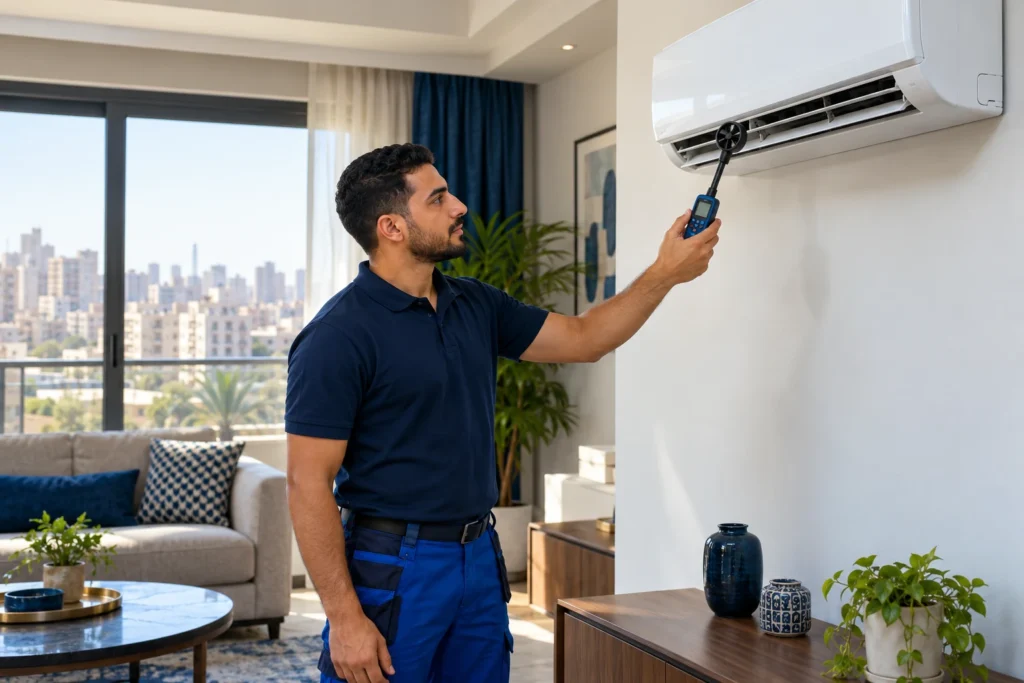
Observe airflow without dismantling equipment
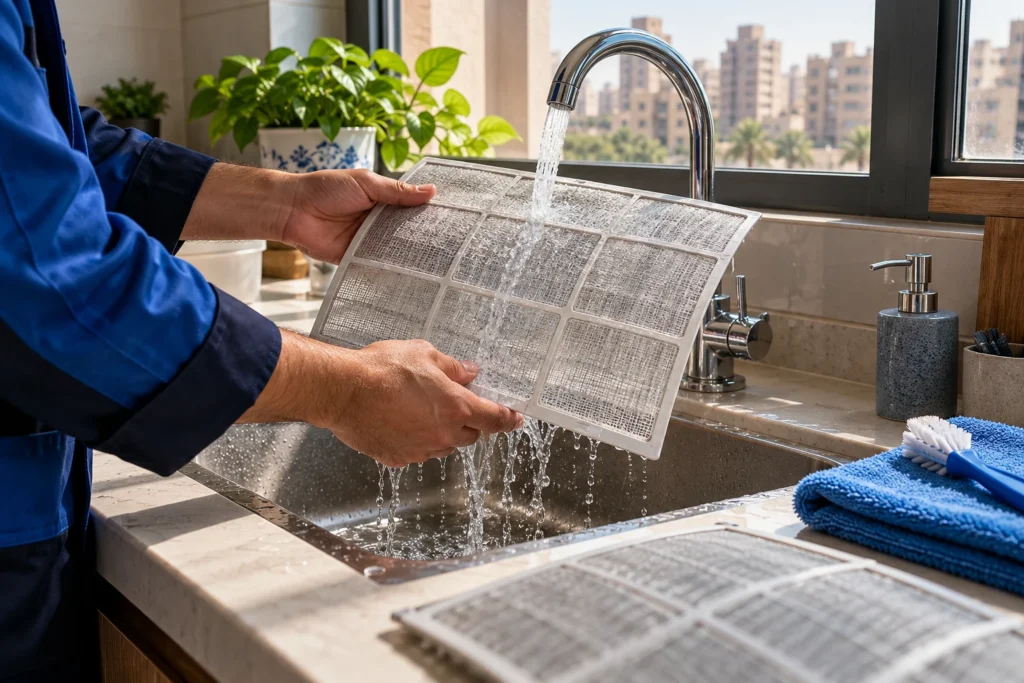
Check that furniture or curtains are not covering the air outlet. Review filter condition only as permitted by the model's manual. For user-cleanable filters, follow our safe filter-care guide. Do not use tools to open parts the manual does not allow users to access.
| Observation | Appropriate action |
|---|---|
| Fan mode selected instead of cooling | Review remote settings using the manual |
| Dirty user-cleanable filter | Follow model-specific cleaning instructions after safe power isolation |
| Visible ice or repeated freezing | Stop cooling and arrange professional inspection |
| Burning smell or a breaker that repeatedly trips | Stop the system if safe and do not repeatedly restart it |
| Persistent weak cooling | Record symptoms and request a survey |
Why refrigerant should not be the first assumption
Carrier explains that low refrigerant can indicate leakage or another issue requiring specialist tools and knowledge. Adding refrigerant without finding the cause is not an adequate diagnosis. Refrigerant work, electrical testing and internal repairs belong with qualified technicians. Do not open connections or attempt work on compressors or electrical capacitors.
Ice can also have several causes. Do not break it off or keep running a system that freezes. Follow the model's instructions and arrange inspection, particularly when the problem recurs or water appears near electrical components.
What to share before a technician visits
Provide the model code, a photograph of any error message, when the problem occurs and when the filter was last cleaned. Mention whether both units appear to operate, but do not climb or approach an elevated outdoor unit to take photographs. Keep any service and warranty paperwork available.
Frequently asked questions
Does weak cooling always mean compressor failure?
No. Settings, airflow and room heat load can contribute, while other causes require specialist measurements.
Would a bigger unit solve it?
Do not replace equipment with a larger unit before diagnosing the issue and assessing the room. Read our capacity guide for the relevant factors.
Should I keep trying to restart it?
Do not repeatedly force operation, especially with unusual sounds or a tripping breaker. Follow the manual and seek support when the issue persists.